Finding Meaning in Everyday Life: A Conversation with Alissa Archibald
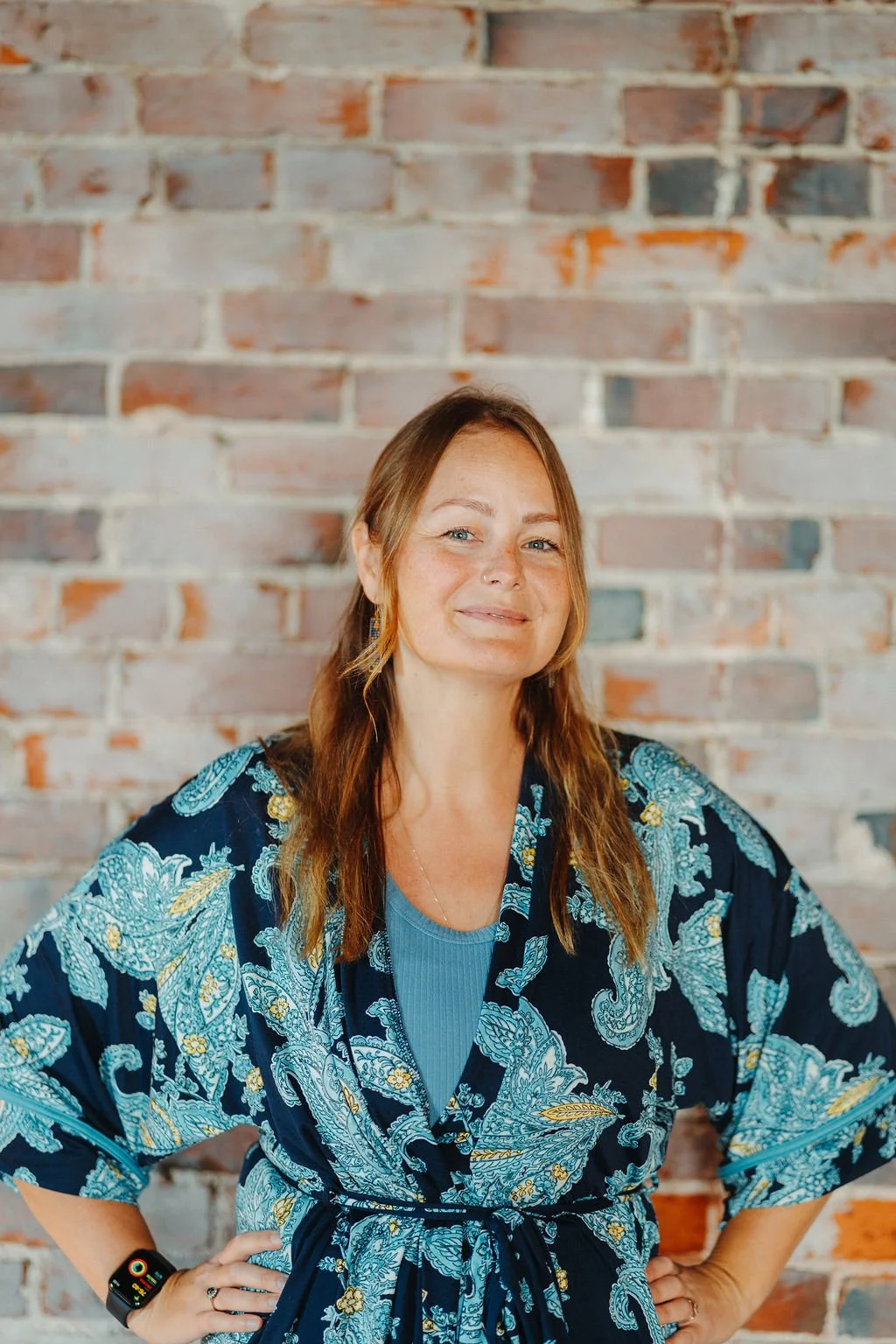
Alissa Archibald
After experiencing an interactive presentation by yoga teacher Alissa Archibald, I immediately knew I wanted to connect with her about spiritual wellness. This piece explores the intersection of mindfulness, meaning, and everyday life.
Spiritual wellness can be a difficult concept to define. For some, it is tied to religion or tradition. For others, it feels abstract or hard to place in modern life at all.
Below, Alissa offers a grounded perspective that brings spiritual wellness back into the ordinary: how we think, how we relate to ourselves and others, and how we move through the world with awareness and intention.
—
What does spiritual wellness mean to you?
It’s funny - if someone asked me whether I’m a spiritual person, my knee-jerk response would probably be no. I feel very grounded in the realities of this world. And yet, so much of what I teach and believe touches spirituality in its own way.
I teach yoga, lead grief yoga workshops, and meditation classes. I talk about how our minds shape the pathways we move through, how our thoughts influence our lives, and how we are not our thoughts. We practice noticing our minds rather than being ruled by them. We explore ideas of ego, self, and the deeper awareness that recognizes our shared humanity and connection to one another.
In class, we talk a lot about “micro joys” — those tiny, meaningful moments that are easy to overlook when life moves too fast. We study yogic philosophy not as something abstract or separate from daily life, but as a practical roadmap for living with more awareness, compassion, steadiness, and purpose.
So maybe spiritual wellness, to me, isn’t about religion or escaping reality. It’s about being deeply present within it — feeling connected to ourselves, to others, and to the meaning woven through ordinary moments.
How can a sense of meaning or purpose impact overall well-being?
One of my favourite books, by one of my favourite authors, is Man's Search for Meaning by Viktor Frankl. What stayed with me most from that book is the idea that humans can endure incredibly difficult circumstances when they have a sense of meaning or purpose to hold onto. Frankl believed that meaning is not something abstract or philosophical reserved for a few people - it is something deeply human that shapes how we move through suffering, relationships, work, growth, and everyday life.
I think a sense of meaning or purpose impacts overall well-being because it gives us an anchor. It helps us understand why we are doing what we are doing, even when life feels difficult, repetitive, uncertain, or painful. Without meaning, people can feel disconnected, numb, or as though they are simply moving through the motions of life. With meaning, even small things can feel significant.
Purpose also changes how we experience challenge. It doesn’t remove hardship, but it can make hardship feel survivable. Caring for others, contributing to a community, raising children, creating something meaningful, helping people, practicing compassion, or even simply being present for life’s small moments can all create a sense that our lives matter and are connected to something larger than ourselves.
At its heart, yoga is not just about movement or flexibility — it is about how we live and relate to the world around us. One of the core teachings within yoga is the idea of service: that part of living a meaningful life is contributing to the well-being of others. I think there is something profoundly grounding in that. When we shift our focus outward -- toward compassion, connection, and service, we often end up feeling more connected and fulfilled ourselves.
What role do personal values and beliefs play in shaping spiritual wellness?
I think personal values and beliefs play a huge role in spiritual wellness because they act as a compass. They guide the choices we make, the relationships we build, and the ways we care for both ourselves and others. For some people those beliefs are rooted in religion or faith, while for others they may come from philosophy, family, culture, lived experience, or practices like yoga and mindfulness.
In yoga philosophy, there is a strong focus on living intentionally and in alignment with principles like compassion, honesty, non-harming, service, and self-awareness. To me, spiritual wellness grows when we take the time to reflect on what truly matters to us and then try to live in a way that reflects those values in everyday life.
How might spiritual wellness show up in everyday life or decision-making?
For me, spiritual wellness shows up every day in my interactions, in my work, and in how I navigate parenting and relationships. It asks me to slow down and reflect before responding, to acknowledge other people’s experiences and perspectives, and to move through the world with a little more compassion and awareness. It also asks me to approach what I do with presence and intention, giving each task the attention it deserves - whether it feels meaningful or mundane.
What are some common ways people explore or connect with their sense of spirituality?
People explore and connect with spirituality in many different ways, but at the end of the day, I think it’s about finding ways to recognize yourself in others and in nature. It’s about feeling connected - to people, to the world around you, and to something larger than your own individual experience.
Why does spiritual wellness look different from person to person or across cultures?
I think spiritual wellness looks different from person to person or across cultures because people are shaped by their experiences, histories, tradition and communities.
At its core though, I think many spiritual traditions and practices are trying to move toward similar things: connection, compassion, understanding, purpose, and recognizing our relationship to something larger than ourselves - and in some cases that something larger is simply the humanity of the people around us. The language, rituals, and pathways may differ, but the human search underneath them is often very similar.
What are some barriers that can make spiritual wellness feel confusing or out of reach?
I think one barrier is that spirituality is often presented as something abstract, or tied to a specific belief system, which can make people feel like it is not for them if they do not identify with religion or traditional spiritual practices.
I also think modern life makes spiritual wellness difficult. Human beings are hardwired to take the path of least resistance - it’s a biological tendency designed to conserve energy and help us survive. But in modern life, we can easily be pulled toward things that feel easier or more comforting in the moment, while actually leaving us more disconnected, distracted, overwhelmed, or unwell over time.
Constant stimulation, scrolling, consumption, busyness, and avoidance can create the illusion of comfort while pulling us further away from reflection, presence, connection, and meaning. Spiritual wellness often asks us to slow down, sit with ourselves honestly, and make intentional choices, which can feel much harder than staying distracted. As I say in my classes, it can be hard to choose to sit with ourselves when we have Times Square on a screen in our pocket.
I think part of spiritual wellness is learning to recognize the difference between what is immediately soothing and what is actually nourishing for us long term.
What are some common myths about spiritual wellness that create pressure or misunderstanding?
I think it’s really important to remember that spiritual wellness is not a destination or an achievement. It’s a practice. It’s something you return to again and again, knowing you will never fully “arrive,” and that’s part of being human.
—
These reflections point to a simple but grounding idea: spiritual wellness is not a fixed state to achieve.
It is a practice of attention, reflection, and connection.
It shows up in how we relate to our thoughts, how we move through challenge, and how we stay connected to what is meaningful to us in everyday life.
Connect with Alissa Archibald:
📸 @windsong_by_the_sea
🌐 http://www.charlottetownyoga.com
📸@charlottetownyoga & facebook.com/CharlottetownYoga
